
Why Website Leads Go Cold and How to Fix Your Follow-Up Process
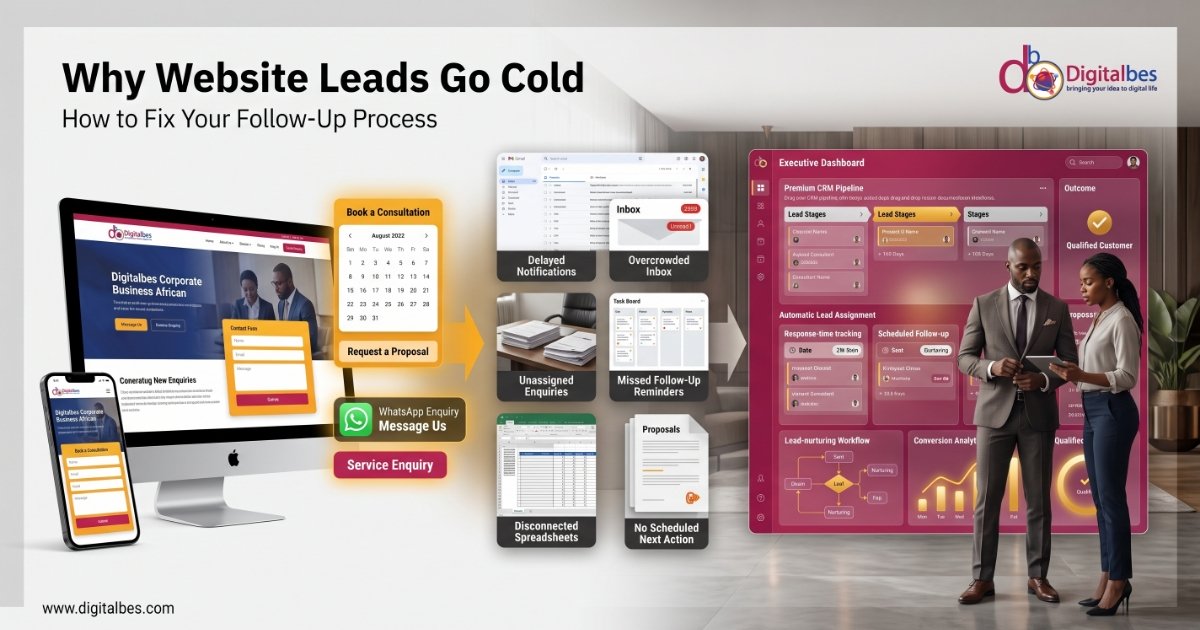
Your website may already be doing its job.
Prospective customers are finding your business, reviewing your services, completing enquiry forms, requesting quotations and asking for consultations.
However, many of those opportunities never become customers.
The immediate assumption is often that the business needs more traffic, more advertising or a complete website redesign.
But the real problem may begin after the enquiry arrives.
A website can generate interest, but it cannot compensate for a slow, inconsistent or poorly managed follow-up process. When leads are left waiting, passed between team members or forgotten in an overcrowded inbox, their initial interest begins to disappear.
This creates a costly gap between marketing and sales:
Marketing generates the opportunity.
The website captures the opportunity.
The follow-up process loses the opportunity.
If your business receives enquiries but struggles to convert them, the issue may not be lead generation.
It may be lead management.
What Does It Mean When a Lead Goes Cold?
A website lead becomes cold when the prospect’s interest, urgency or willingness to continue the conversation declines.
The prospect may have submitted an enquiry with genuine buying intent. But after receiving no immediate acknowledgement, no useful response or no clear next step, that interest begins to weaken.
Cold leads are not always poor-quality leads.
In many cases, they are previously interested prospects who experienced too much friction after making contact.
A lead may go cold because:
The response took too long.
The first reply was generic or unhelpful.
Nobody took ownership of the enquiry.
The prospect was not properly qualified.
Follow-up depended on someone’s memory.
A quotation was sent without another conversation.
The business provided no reason to continue engaging.
The prospect chose a more responsive competitor.
This means lead conversion is not determined only by the website. It is influenced by the entire experience that follows the initial enquiry.
Why the First Response Matters
When someone submits an enquiry, the person is actively thinking about a need, challenge or purchase.
At that moment:
Interest is relatively high.
The problem feels relevant.
The prospect is actively comparing options.
The business has an opportunity to establish trust.
A clear next step can move the conversation forward.
But that window does not stay open indefinitely.
As time passes, the prospect may become distracted, reconsider the need or contact another provider. A delayed response communicates something about the business, even when the delay is unintentional.
It can suggest:
Poor internal coordination
Limited capacity
Weak customer service
A lack of urgency
An unreliable delivery process
The first response should therefore do more than confirm that a form was submitted. It should reinforce confidence and create momentum.
The Most Common Reasons Website Leads Go Cold
1. The Business Responds Too Slowly
Slow response is one of the most common weaknesses in lead management.
An enquiry arrives, but the relevant team member is busy. The notification remains unread, or the message is forwarded internally without a clear owner.
By the time someone responds, the prospect may already be speaking with another provider.
Every enquiry should have:
A defined response target
A responsible owner
A notification process
A visible status
A clear escalation route
Without these elements, response speed depends on chance.
2. Enquiries Go Into a Shared Inbox With No Ownership
Shared inboxes can be useful, but they often become places where responsibility is unclear.
Everyone can see the message, so everyone assumes someone else will answer it.
This creates a dangerous gap:
Visibility without ownership does not create accountability.
Every new enquiry should be assigned to a named person, team or role. The system should also show whether the lead is new, contacted, qualified, awaiting information, sent a proposal, won or lost.
Ownership is what converts an enquiry into an accountable business opportunity.
3. The First Reply Is Too Generic
A prospect submits specific information but receives a copy-and-paste response that does not address the request.
This makes the interaction feel impersonal and may signal that the business has not carefully reviewed the enquiry.
A stronger first response should:
Acknowledge the prospect’s request.
Reference the stated business need.
Ask any essential qualifying questions.
Explain the next step.
Provide an expected communication path.
The objective is not to send a long sales message. It is to show relevance, competence and direction.
4. The Business Has No Central Lead Record
When enquiries are managed through separate email accounts, spreadsheets, social media inboxes and messaging platforms, the business cannot easily see the full customer journey.
Important information becomes fragmented.
A team may struggle to answer:
Where did the lead originate?
Who owns the opportunity?
Has the prospect received a reply?
What problem needs to be solved?
What information has already been shared?
Was a meeting scheduled?
Was a proposal sent?
When should the next follow-up happen?
Why was the opportunity won or lost?
A CRM or centralised lead-management system gives the business one reliable view of every opportunity.
5. The Lead Is Not Properly Qualified
Not every website enquiry represents the same level of intent.
Some prospects are ready to begin immediately. Others are researching, comparing options or waiting for internal approval.
A business should therefore qualify enquiries using relevant criteria, such as:
The problem to be solved
Required service or platform
Expected users or audience
Project urgency
Decision-making process
Relevant integrations
Available resources
Desired business outcome
Qualification helps the team decide how the lead should be handled without dismissing prospects who need more time or information.
6. A Proposal Is Sent Without a Follow-Up Plan
Many businesses treat the proposal as the final step.
The document is emailed, and the team waits.
But a proposal rarely closes a complex sale on its own.
After sending a proposal, the business should establish:
Whether the prospect received it
When the proposal will be reviewed
Whether other stakeholders are involved
What questions remain unanswered
The date of the next conversation
What decision or action is expected
“Proposal sent” should never mean “wait indefinitely.”
It should trigger the next stage of the sales process.
7. The Follow-Up Is Inconsistent
Some leads receive repeated calls. Others receive one email and are forgotten.
This usually happens when follow-up depends on personal memory rather than a defined workflow.
A structured follow-up process should specify:
When the first response is sent
When the first direct contact occurs
How many follow-ups are appropriate
Which communication channels should be used
What information should be shared
When a lead moves into nurturing
When an opportunity should be closed or revisited later
Consistency protects opportunities while maintaining a professional customer experience.
8. The Business Provides No Continuing Value
A prospect may not be ready to buy immediately.
That does not mean the opportunity has disappeared.
Businesses often lose future customers because communication stops once the immediate sale does not happen.
A nurturing process can keep the business relevant through:
Helpful articles
Case studies
Relevant project examples
Educational videos
Implementation guides
Frequently asked questions
Event invitations
Product demonstrations
Periodic check-ins
The goal is not to overwhelm the prospect with messages. The goal is to remain helpful while the decision develops.
9. Website, Marketing and Sales Systems Are Disconnected
A business may generate leads through its website, social media campaigns, paid advertising and email marketing, but store each source separately.
When these systems do not communicate, valuable context is lost.
An integrated lead-management environment can connect:
Website form
→ CRM record
→ Team notification
→ Lead assignment
→ Qualification
→ Appointment
→ Proposal
→ Follow-up
→ Decision
This gives the team greater visibility and reduces the possibility of opportunities disappearing between platforms.
Warning Signs Your Lead Follow-Up Process Is Broken
Your business may have a follow-up problem if:
Enquiries are answered at inconsistent times.
Team members cannot confirm who owns a lead.
Prospects repeatedly provide the same information.
Follow-up relies on spreadsheets or personal reminders.
Proposals are sent without scheduled review conversations.
Marketing produces traffic but few qualified customers.
Leads from WhatsApp, email and website forms are managed separately.
Management cannot see lead status or conversion performance.
Lost opportunities are not reviewed.
Prospects regularly say they never received a response.
These are not merely administrative inconveniences.
They are potential revenue leaks.
The Commercial Cost of Weak Follow-Up
Most organisations calculate the cost of:
Building a website
Running advertisements
Producing content
Hiring salespeople
Maintaining digital platforms
Far fewer calculate the value of the enquiries already being lost.
Consider a simple example.
If a business receives 100 genuine enquiries and converts 20, the conversion rate is 20%.
If poor follow-up reduces conversions to 10, the organisation has not simply lost ten leads. It has potentially lost ten customers and the future value connected to those relationships.
The website generated the opportunity.
The marketing investment attracted the prospect.
The follow-up process failed to capture the commercial value.
Before increasing advertising budgets, businesses should ask whether the existing enquiry process is converting opportunities efficiently.
More leads entering a weak process may simply create more lost opportunities.
A Premium Lead Follow-Up Framework
A strong lead-management process should be deliberate, visible and measurable.
Stage 1: Capture
The website should collect the information required to understand the request without creating an unnecessarily long form.
Useful fields may include:
Name
Organisation
Contact information
Service required
Brief project description
Preferred contact method
The form should be easy to use on mobile devices and should confirm successful submission.
Stage 2: Acknowledge
The prospect should receive immediate confirmation that the enquiry has been received.
The acknowledgement should:
Thank the prospect
Confirm receipt
Restate the next step
Provide a reference or contact point if appropriate
Set a realistic expectation for communication
This reduces uncertainty and reassures the prospect that the process has begun.
Stage 3: Notify and Assign
The responsible person or team should receive an immediate notification.
The lead should then be assigned to a clear owner.
Assignment should reflect the nature of the opportunity. For example:
Website projects
Custom software
eLearning and LMS
Digital marketing
Enterprise solutions
Maintenance and support
The assigned owner becomes responsible for moving the opportunity forward.
Stage 4: Qualify
The initial conversation should determine whether the organisation can solve the prospect’s problem and what form the engagement should take.
Qualification should explore:
Business objectives
Existing challenges
Users and stakeholders
Desired features
Current systems
Technical requirements
Project priorities
Expected outcomes
This information improves the quality of recommendations and proposals.
Stage 5: Recommend the Next Best Action
Not every lead should immediately receive a proposal.
Depending on the complexity of the request, the next step may be:
A discovery meeting
A requirements workshop
A technical assessment
A website audit
A demonstration
A budget discussion
A phased implementation recommendation
The next action should move the buyer closer to a well-informed decision.
Stage 6: Track the Opportunity
Every lead should have a visible status.
A practical pipeline may include:
New enquiry
Contacted
Qualified
Discovery scheduled
Solution proposed
Proposal sent
Follow-up required
Decision pending
Won
Lost
Future opportunity
Management should be able to see how many opportunities are at each stage and where delays are occurring.
Stage 7: Follow Up With Context
Effective follow-up should move the conversation forward.
Instead of repeatedly asking, “Have you made a decision?”, provide something useful:
Clarify a requirement
Answer an objection
Share a relevant case study
Explain an implementation option
Provide a demonstration
Suggest a phased approach
Confirm the next stakeholder conversation
Contextual follow-up feels helpful rather than intrusive.
Stage 8: Nurture Long-Term Opportunities
Some prospects may need more time.
Place them in a structured nurture sequence based on their interests and stage of readiness.
A prospect interested in an LMS should receive relevant eLearning insights. A business considering custom software may benefit from guidance on requirements, integrations and phased development.
Relevance is more effective than sending every contact the same generic message.
Stage 9: Review and Improve
Lead management should be measured continuously.
Useful questions include:
How quickly do we respond?
Which sources generate qualified leads?
Where do leads stop progressing?
How many proposals result in decisions?
Why are opportunities lost?
Which follow-up activities influence conversion?
Are forms collecting the right information?
Performance data should guide improvements to the website, marketing campaigns and sales process.
Where Automation Creates the Most Value
Automation should strengthen accountability, not remove human judgement.
High-value automation opportunities include:
Immediate acknowledgements
Confirm that the enquiry was received and explain the next step.
Lead creation
Create a CRM record directly from the website submission.
Lead routing
Assign the enquiry based on service, industry, location or project type.
Internal alerts
Notify the correct team member when a lead arrives or remains unattended.
Follow-up tasks
Create reminders for calls, meetings, proposal reviews and future contact.
Appointment scheduling
Allow qualified prospects to select an available consultation time.
Pipeline updates
Track changes in lead status and surface stalled opportunities.
Reporting dashboards
Show response times, sources, pipeline value and conversion performance.
Automation handles consistency. People handle judgement, relationships and complex decisions.
What a High-Converting Follow-Up System Looks Like
A mature process connects marketing, website activity and sales operations.
Qualified visitor arrives
↓
Visitor submits an enquiry
↓
Prospect receives confirmation
↓
CRM record is created
↓
Lead is assigned
↓
Responsible person is notified
↓
Qualification conversation happens
↓
Next action is scheduled
↓
Opportunity is tracked
↓
Follow-up is completed
↓
Result is recorded
The system makes every opportunity visible and accountable.
How Digitalbes Limited Can Help
At Digitalbes Limited, we help organisations strengthen the complete journey from online discovery to business conversion.
Our capabilities include:
Conversion-focused website design
Intelligent enquiry forms
CRM integrations
Custom lead-management platforms
Automated notifications
Customer and client portals
Appointment and consultation workflows
Proposal-management systems
Sales dashboards
Business-process automation
Digital marketing integration
Website maintenance and support
Our objective is not merely to help businesses generate more enquiries.
Our objective is to help businesses build the digital systems required to manage, nurture and convert opportunities effectively.
Final Thoughts
A lead rarely becomes cold without a reason.
It becomes cold because the response was delayed, the communication lacked relevance, the next step was unclear, or the opportunity moved through a process without ownership.
The solution is not always more advertising.
Sometimes the fastest path to growth is improving what happens after someone says:
“I’m interested.”
Before investing in more traffic, review the journey your existing leads experience.
Because the value of a website is not measured only by how many enquiries it generates.
It is measured by how effectively those enquiries become meaningful business relationships.
Are Valuable Website Enquiries Slipping Through Your Follow-Up Process?
Digitalbes Limited can help you connect your website, CRM, automation and customer journey into a structured lead-conversion system.
Visit Digitalbes Limited to request a consultation.
Bringing Your Ideas to Digital Life.
Join the Conversation
Written by
Brighadimo Friday
Ready to build something
extraordinary?
Join forward-thinking companies that trust Digitalbes to deliver scalable, high-performance digital solutions. Let's turn your vision into measurable growth.